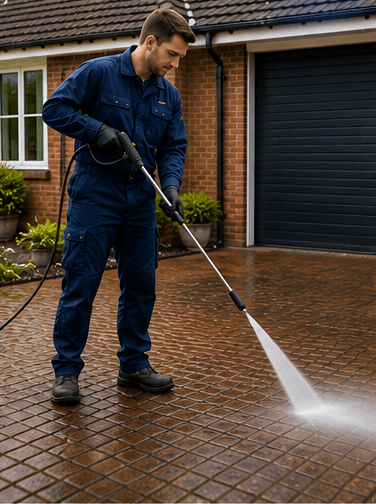
What is the short answer?
A familiar product is not automatically suitable for every exterior surface. Compatibility, label directions, run-off and the condition of the material all matter more than a universal recipe.
This guide owns the search topic cleaning a driveway with a pressure washer. It is organised around the decisions a UK homeowner needs to make before comparing a do-it-yourself approach with a provider quote.
What should you check before using a product?
Confirm that the product is intended for the material and intended use, then follow its label. Do not turn an online recipe into a promise of compatibility or a guaranteed result.
Begin with photographs of the whole area and the details most likely to change the work. If the material is unknown or the condition is difficult to judge, make that uncertainty part of the brief instead of guessing.
What deserves special attention for cleaning a driveway with a pressure washer?
Keep the question tied to the real driveway cleaning job. The material, condition, access and requested result determine which advice is relevant and what a provider needs to assess.
- Driveway area
- Block paving, tarmac, concrete or resin
- Oil marks and established growth
- Re-sanding, sealing and access
What belongs in the job brief?
Use the same brief for every quote. Consistent information exposes genuine differences in method and scope instead of differences caused by providers pricing different jobs.
| Brief field | What to record | Why it helps |
|---|---|---|
| Surface | Material, approximate area or quantity | Defines what is being assessed |
| Condition | Visible staining, growth, damage or build-up | Sets a realistic starting point |
| Access | Height, gates, extensions, conservatories and nearby obstacles | Shows assumptions that can change the method |
| Scope | Main clean, edges, treatments, waste and optional repairs | Makes proposals easier to compare |
Which safety or product guidance matters?
The surface and access determine which guidance is relevant. Treat labels and site-specific risk as part of the job, not as small print after a method has already been chosen.
Pressure-cleaning equipment introduces site-specific risks around electricity, people and adjacent property. The HSE publishes guidance on electrical risks from water pressure cleaners; a provider should still explain the plan for the actual property.
What else do people ask?
These supporting questions are assigned from Washom’s supplied fan-out research. They remain sections on the owning page rather than becoming thin competing URLs.
Is this method or product safe for all relevant surfaces?
The suitable approach depends on the material, its condition and what surrounds it. Check the product label and surface guidance, begin with the least aggressive suitable method, and ask a provider to explain the proposed process before work starts.
Which guides should you read next?
Stay within the same service cluster when the question is closely related. Move back to the service page when you are ready to prepare a quote request.